Posted by Steve Linder on Fri, Mar 05, 2010
Get a free DVD about Costa Rica here FREE DVD
I guess yesterday was one of those lucky days you stumble upon without effort. Here's the story.
The folks at International Living asked me to check out venues to hold an upcoming event in Costa Rica scheduled for August. I'd already checked out the San Jose Palacio and the Ramada Plaza Herradura on a previous trip so this time I was headed to the Intercontinental Hotel in Escazu.
I arrived at a hotel fortified with at least 100 police manning barricades, security check points, car inspection facilities and about 50 police motorcycles parked like a synchronized swimming display. I thought to myself that this show of police might be unnerving to attendees at an International Living event but I proceeded on. I obviously had no clue as to what was going on. I was waived to the first check point and I think my new Panama hat must have made me look official, granting me a wave through and a smile. Next I had to pass through the car inspection station. Mirrors were rolled under my car, a dog hopped in the trunk to sniff around while a very attractive police woman asked to inspect the inside of the vehicle. I had to get out while the complete inspection took place. Next I was wanded with a Garrett metal detecting wand, a device guaranteed to find my pocket full of colone coins. Once it was established that I was not armed (other than the ones up my sleeve) I was allowed back into my car to proceed to the parking lot. Again I thought this seemed excessive but I guess the Intercontinental Hotel maintains a higher standard than the Adventure Inn, where I am used to staying.
There were at least 6 TV crews including CNN international and all the local Costa Rican news networks. Again not at all aware of what was going on there, I proceeded into the hotel and headed to the business office. I reviewed their conference facilities as well as the contract, terms and requirements. it was then that the director of event sales explained who their guests of honor were that day. I then headed back into the lobby to grab a few pictures of the facilities to send to the event manager at International Living.
Bad Idea.... Seems they really don't want civilians taking pictures of a hotel when it is full of ministerios, presidentes y extranjero personas importantes. I acknowledged the request to skip the photos but managed to get a few in prior to realizing what a blow to international security such a thing might be.
As I was ready to leave, I caught view of a large group of official looking officials in the veranda conference area milling about. Large rolling racks holding delicious looking plates of food had been rolling in that direction along with a very nice looking portable bar. It was just at that moment when I thought to myself "a couple was recently able to crash a White House dinner" and that I could probably do so as well. Here was my plan, my chance for fame, my coming out. As I moved toward the entry to the veranda, two OIJ police (the equivalent to our FBI) stalked toward me. In a split second moment of indecision I thought of running into the veranda. It was that moment that I saw my life pass before me, a vision of my body being riddled by bullets from automatic weapons holding me in the air even after my entire lower torso had been cut free by gunfire. It was then that it struck me that it was probably not such a good idea after all. Meeting the Presidents, Hillary and the OIJ would have to wait until next time.
Please tell your friends about our blog and feel free to
SUBSCRIBE OR LINK TO OUR BLOG as well.
Posted by Steve Linder on Tue, Mar 02, 2010
Get a free DVD about Costa Rica here FREE DVD
This article was written by Wendy Dwight Foster, a Canadian living in our developments.
I don't know about you but the fact that I am now being called a "Boomer" really came out of left field, sort of! A boomer in Canada is defined as those of us born between 1945 and 1960. I fall into that category! I am told I should start looking forward to retirement, ahhh! Have I planned for it? Do I want to stay in Canada and get used to using an ergonomic snow shovel? Is there enough money put away between my RRSP, CPP and OAS?? IF the answer is no, what alternatives do I have?
Most Canadians, according to Stats Canada figures from as recent as 2006 (which is really recent if you know about StatsCan) 30% of us spend approximately 30% of our monthly income on shelter alone. All those other optional things like healthcare, food, vehicles, etc get what's left of our pay cheque. In there somewhere, we're also told to "save for retirement". Why, because by the time we boomers get to what's there in government savings (that we paid into all our working lives) there may not be enough or any there at all! So now what are we going to live on? Do we move in with our kids?
This means that we may need to consider another way of living. Living somewhere else, where what ever dollars we have in retirement will go farther: where we don't have to give up the familiar Canadian sacred cows of democracy, universal healthcare, non-violence and treating people with respect and dignity. Where else in the world could I have that AND be able to live very well in my retirement?
The answer is in an increasingly popular country; Costa Rica. Now, before you click onto another page, I am serious and I am speaking from first hand experience!
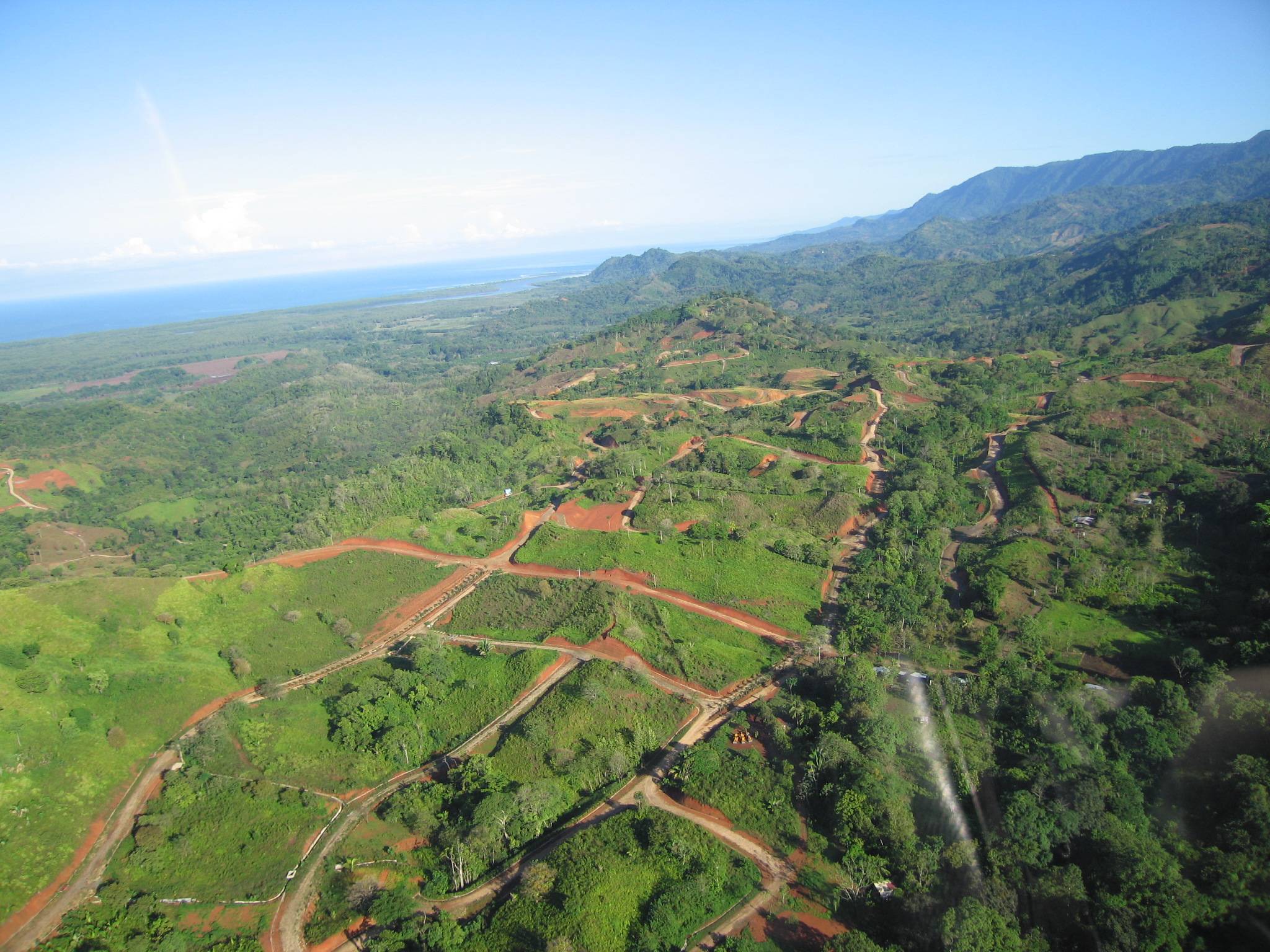
My husband and I decided that we wanted to retire somewhere warm (86 the snow shovel!) somewhere affordable and to a place with good healthcare at affordable rates as we will require it as we get older, consistently warm temperatures, wonderful water to drink, clean air to breath and friendly local people. We found all of these things and more in Costa Rica in the southern Pacific Coastal area in a little community called Ojochal.
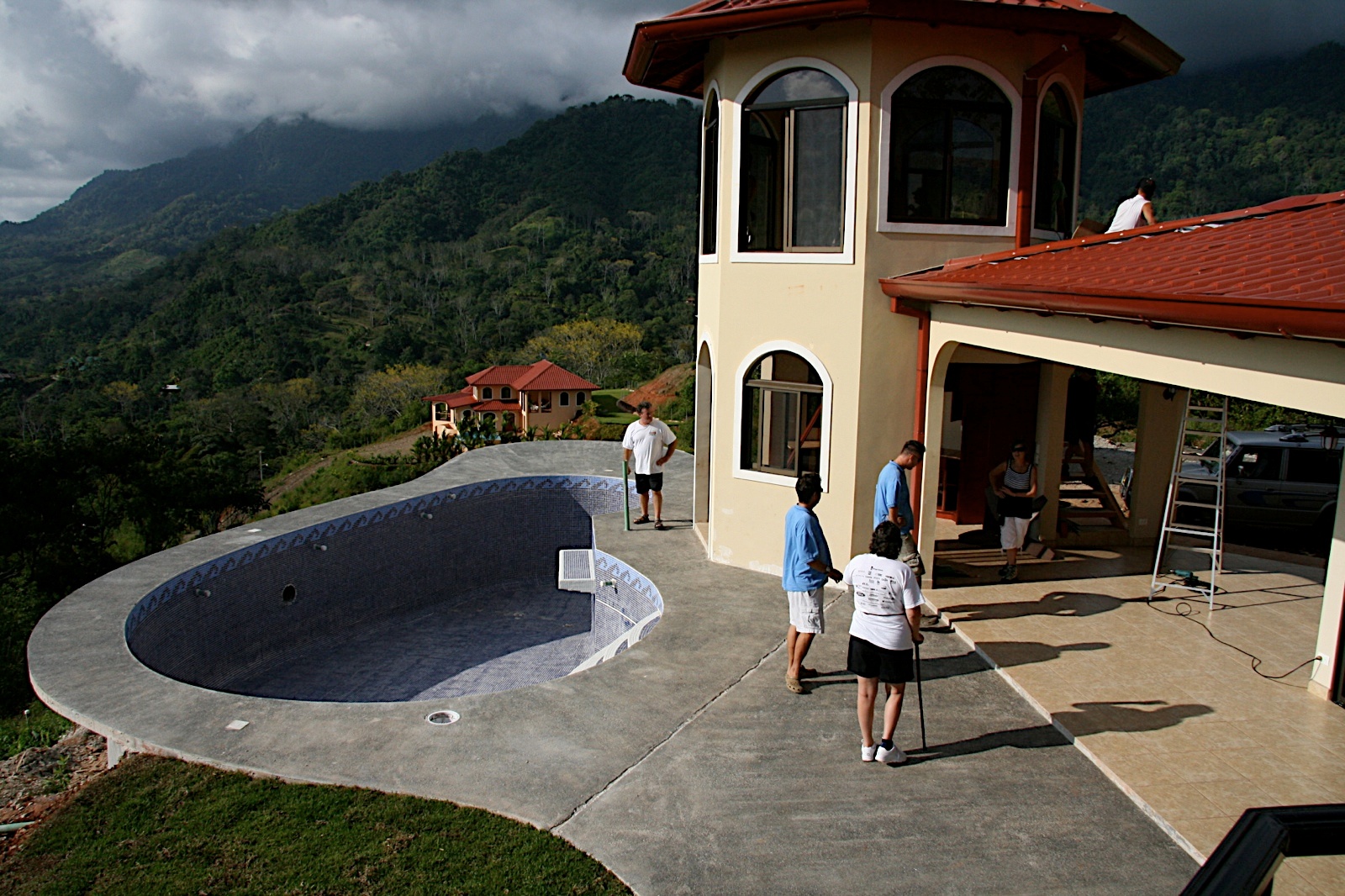
This community is becoming a second home for lots of Canadian Boomers just like you and me. There are many lots to choose from in our community of Ventana Del Pacifico. The house of your dreams is yours to plan. The property taxes on a modest home, including a pool will cost you less than your monthly property taxes in most large Canadian cities, based on a house of comparable size. Local food is organic, cheap, delicious and plentiful. You can expect to pay about $1500 per month (U.S.) to live, assuming your house is paid for. Now how far will your retirement savings go?
But, my kids are in Canada.....what about my grandkids??? If your kids are like ours, when was the last time you saw them?? How often do they visit you now? Do you e-mail each other, do you Skype each other? You can still do all of these things and flights home are cheap and plentiful.
If you're like us, the thought of retiring where everyone else retires in Western Canada (I mean the Coast - no disrespect) was not an option. The costs are just too high and they keep rising!! The average house price is Canada has just risen 20%, after coming out of the worst economic time in over 100 years!
I am tired of shovelling snow! It's our turn.......we are going to enjoy the pura vida (the good life!). Come and join us in a great community!
Please tell your friends about our blog and feel free to
SUBSCRIBE OR LINK TO OUR BLOG as well.
Posted by Steve Linder on Tue, Feb 23, 2010
Get a free DVD about Costa Rica here FREE DVD
I arrived in Quito last night to set up my booth for International Living´s `'Ultimate Event'. The event runs all week at the Swissotel in Quito and we (Pacific Lots) are the major sponsor of the event. I have three speaking spots, one on Costa Rica in General, one on our developments and one on health tourism in Costa Rica. I managed to get our 10 foot display here in one piece, along with our pòsters, DVD´s, brochures, etc. Keep in mind that Quito is 8,000 feet elevation and remember that I live at sea level so I will likely feel like a guppy out of water for the next 6 days.
Quito is a big city but kind of gray. Ecuador has some economic issues, which makes it cheap to live here, but would not be a choice either I or Kristina could live with. I get unnerved by guards with automatic weapons, even if they are guarding important things, like the Kentucky Fried Chicken Store :-). It is a fascinating place to visit though the coast is much colder than I would have figured. The ocean offshore is very cold and keeps the coast quite cool.
I head back to Miami on the 1st of March, then on to Costa Rica on the 3rd, with 4 back to back tour groups. See you all mid March or so.....
Please tell your friends about our blog and feel free to
SUBSCRIBE OR LINK TO OUR BLOG as well.
Posted by Steve Linder on Wed, Feb 17, 2010
Get a free DVD about Costa Rica here FREE DVD
In order to work in Costa Rica, you must either be a citizen or have legal permanent residency. With any other residency type (rentista, pensionado, etc), you are allowed to own a business but you cannot work in that business. You must hire Costa Rican labor and your role is limited to management of the business. That is why many of our restaurants may have an expat owner but all they do is visit with customers, they don't work the kitchen or wait tables for example.
More popular now are people who "tele‐commute" internationally. Those who work fro a company in their home country (i.e. USA, Canada, Great Britain, Germany, etc) on or over the Internet. They are paid by their company, but physically reside in Costa Rica. This is legal. However, there are two mportant points:
The paycheck or deposit must come from outside Costa Rica and your work must be unrelated to Costa Rica. Medical transcription and computer programming are good examples.
You still must apply and be accepted as a legal resident. Under no circumstances can you come to Costa Rica to work and not be legal, regardless of where your paycheck comes from. For example, younger people could apply as "rentistas," then convert to Permanent Residency after 4‐5 years.
So to be clear, while you can own a business here and live off the income from that business, you cannot actually work in that company in any capacity other than owner and manager.
"Representante" is a form of residency most used by those who set up and manage businesses in Costa Rica and serve as a Director in that corporation. Here, you can receive a salary and do the work of the corporation, but there are heavy investment minimums, required annual financial statements, and you must employ Costa Rican labor in that business. It is considered a lot of responsibility to do this, AND immigration can randomly and arbitrarily enforce all the rules.
A Permanent Resident has all the rights of a Costa Rican, and can hold a job in any sector, own a company, and work within that company in any capacity. It takes time to establish permanent residency however.
Please tell your friends about our blog and feel free to
SUBSCRIBE OR LINK TO OUR BLOG as well.
Posted by Steve Linder on Sun, Feb 14, 2010
Get a free DVD about Costa Rica here FREE DVD
Here is a great Slide Show I made for risk analysis when considering moving abroad. With 7 years of International Business at the college level, I present things to consider when choosing a country to relocate or invest in. Risk and return are related and our threshold for risk varies from person to person. Take a look at this slide show to get a better understanding of how to use risk analysis to help in the selection process of where to live, relocate, retire or invest. Remember that every scenario has risk, even that of doing nothing. Also remember that when looking back at life it is often not what we did that we regret, it is what we didn't do.
Please tell your friends about our blog and feel free to
SUBSCRIBE OR LINK TO OUR BLOG as well.
Posted by Steve Linder on Sat, Feb 13, 2010
Get a free DVD about Costa Rica here FREE DVD
The Scarlet Macaw, one of the most beautiful Macaws, lives high in the trees of lowland deciduous or tropical evergreen forests gracing forest canopies from Mexico to central South America. This brilliantly colored macaw is the only one found on the Pacific side of Costa Rica, and it rarely flies on the Caribbean side, where the Great Green Macaw lives.
Macaws are the largest parrots in the Americas, and the Scarlet Macaw is distinct both in color and shape. It's bold colors include bright red, blue and yellow. It has a large powerful bill for cracking tough seed coats and nuts. Both sexes of these birds have adult plumage from a young age. The scarlet macaw noisily flies high over the canopy and their travels may range far both daily and seasonally. Their loud, resonant, boisterous calls can often be heard as they fly, but they are usually quiet while feeding. Pairs, trios, or small family groups are often seen, but these may sometimes merge into flocks of 25 or even 50 individuals at large roosts in tall trees or mangroves.
The Scarlet Macaw nests in large holes in tall living or dead trees; they do not dig these holes, but rely on finding cavities that are high off the ground and have vertical entrances. Finding enough of such trees can be a limiting factor for these birds to maintain populations in an area, especially because some bee species occupy the same kind of tree cavity. A macaw pair will lay 1-2 eggs per season in such a nest and raise them together. These macaws are serially monogamous, but they may change mates after several seasons.
In 1900, these parrots could still be readily seen in forests throughout Costa Rica; by 1950, however, due to habitat destruction, they were absent from the Caribbean slope except in the Northwest. They have also suffered from the pet trade; fortunately, today they are protected in every country in which they live. However, in Costa Rica, their populations still have been reduced by the destruction of their habitat. They are now constrained to the forests of the upper Golfo de Nicoya and the forests ofthe Osa Peninsula. We have quite a few mated pair in and around Ojochal and our developments. They are amazing to see in flight.
Their favorite food, at least in Costa Rica, is the almond sized and shaped seed of Terminalia Catappa tree. They can be rapid foragers. A flock of 10 birds can carpet the ground with three hundred of these fruits in a single hour as they look for the seeds.
Skutch, Alexander F. and F. Gary Stiles. A Guide to the Birds of Costa Rica.
Utica: Cornell University Press,1989.
Stiles, F.G. in: Janzen, Daniel H. Costa Rican Natural History. Chicago:
University of Chicago Press, 1983.
Please tell your friends about our blog and feel free to
SUBSCRIBE OR LINK TO OUR BLOG as well.
Posted by Steve Linder on Fri, Feb 12, 2010
Get a free DVD about Costa Rica here FREE DVD
Overview of self directed retirement basics:
Basically you can use any retirement funds, SEP, Simple IRA, traditional IRA, Roth IRA, 401k money, etc to invest any way you'd like. The financial services companies don't make us very aware of that since they make no money from you investing your funds through self directed methods. IRS rules are very liberal however, the few restrictions being only that you can't invest in collectibles and you MUST have a qualified intermediary handle your funds when you are investing them as well as any income distributions or other gains to put back into the fund.
There are many firms that specialize in that service. Basically you take your investment funds out of the market, give the proceeds of the sale to a qualified third party who for a small fee manages the purchase of the asset you identify and chose to buy. Assets can be raw land, improved land with a home, a condo, both domestic or international, an airplane, gold, stocks, nearly anything that could be considered an investment. You are not allowed to personally profit in any way from the investment until you reach retirement status, all earnings stay with the investment, which is verified by the qualified intermediary. Many people are using self directed retirements to move their money offshore. There is significant concern about the stability of the US dollar. Holding your retirement funds in non dollarized assets is not a bad strategy.
So for example if you owned a rental property that you bought with your retirement funds, the rental income would go back into your investment account for things like paying the mortgage (if you had one), the taxes, the insurance, maintenance, etc and you could not take any distribution from the income, instead all income remains in the self directed account as earnings. Once you reach retirement age, you can start taking the distribution and will pay tax on it based on your bracket at the time and the type of retirement dollars you had used to make the investment in the first place. For example, if you had used money from a Roth, the income and distribution would not be taxed when you take it later on.
Likewise you could buy a piece of land and hold it while it appreciates or until you reach retirement age and plan to build a house on it. You could also purchase land and build a home on it, all with retirement funds, but you have to have enough money in your retirement savings accounts to do both, or at least to service a construction loan over time. You can not mix retirement savings and your own money (non retirement funds)
If you sold a house that you'd previously purchased with self directed funds, any capital gain would stay with the investment fund, not subject to tax again until you retire and start taking distributions. If there were a capital loss, likewise, it stays with the investment. You could not use the asset as a vacation home or to live in (although there are ways around this by setting yourself up as the tenant and paying rent to yourself but schemes like this are frowned upon by both the IRS and the qualified intermediaries that are out there). There are people who do so however.
You could also hold raw land simply looking for appreciation, hold gold or other assets, etc. You typically pay very little in terms of fees when self directing your retirement versus having Fidelity or another brokerage firm, managing your assets for you. Hope that answers your questions. For more information Google "self directed retirement". A word of caution - Seems many firms have all of a sudden become experts in managing your self directed retirement funds. If you plan to use your funds to purchase property outside the US, be sure to use a firm with sufficient international experience. I can recommend a good intermediary company if you want to discuss this topic further. We can recommend a good intermediary company if you want to discuss this topic further.
Please tell your friends about our blog and feel free to
SUBSCRIBE OR LINK TO OUR BLOG as well.
Posted by Steve Linder on Mon, Feb 08, 2010
Get a free DVD about Costa Rica here FREE DVD
A Woman President- Today marks a historical moment. Laura Chinchilla was elected president last night by carrying nearly 50% of the vote. Costa Rica has the highest concentration of women in office on the planet, currently at about 40%. The government is suggesting that the number should be 50/50 and are working to do so. Costa Rica also has term limits of 4 years for a President. They can run again but must sit out at least a four year term before being eligible to run again. This was Oscar Arias's second term in office.
Proud to Vote-In Costa Rica, voting is a big deal. Costa Rican's are required to vote, though there is no type of enforcement. In this election, just shy of 70% of all eligible voters turned out to vote. Anyone can form a political party and there were 7 party candidates represented in this years Presidential elections. A candidate must receive at least 40% of the vote to be declared the winner in the Presidential elections or the top two candidates will be in a run off election. Laura swept the elections when we consider that she received just shy of 50% of the vote and that there were 6 other candidates in the race. Costa Ricans are very proud of their parties. As an election approaches you will see various political flags placed on cars throughout the country. During elections, polling stations are set up in places like prisons, elderly housing centers and hospitals to help insure that everyone gets a chance to vote. Many of the political parties also provide rides to the polls as well as incentives like a gas card for a small amount of gas for your car.
About Laura Chinchilla- Laura Chinchilla, 50, is married and has a BA degree in Political Science from the University of Costa Rica, and a Masters in Public Policy from Georgetown University in Washington DC, USA. Laura was the Vice President serving with Oscar Arias until she resigned about 6 months ago to run for the presidency. She is part of the PLN (National Liberation Party) and had the support of Oscar Arias. She is considered to be a social conservative and opposes abortion and gay marriage. She is pro womans rights. She has a teenage son and has lived a modest lifestyle.
Oscar and Laura- accomplished a lot in the past four years. Oscar has spend his last few weeks attending ribbon cutting ceremonies on various projects he saw to completing during his term in office including updates to the Costanera Highway, the completion of the Caldera San Jose toll road, the construction of a new stadium in San Jose, updates and privatization of both international airports in Costa Rica. Oscar and Laura have also done a good job of keeping the Costa Rican economy on track while much of the world was suffering. The push for infrastructure development and the passing of CAFTA, the Central American Free Trade Agreement have helped Costa Rica weather the storm. Unemployment remains lower in Costa Rica than in much of the world though still higher than normal at about 8%.
Laura Chinchilla is Pro Development - Her number one campaign issue was to be tough on crime. Costa Rica's murder rate just reached 11 per 100,000 inhabitants. 10 per 100,000 is considered good and the rise to 11 has raised concern. Though still far less than it's neighbors (Panama is approaching 30 per 100k, Nicaragua has seen an increase in political violence with the 2007 murder rate per 100,000 of 12.5) There has also been an increase in street crime, robberies and break-ins. A major complain in Costa Rica is a lack of enforcement. Laura has been accused of favoring developers at the expense of conservation but the population within Costa Rica has overwhelmingly supported the trade off. Cosa Rica continues to enjoy the highest standard of living in central America.
Drug Traffic Increase- Costa Rica has always had the lowest incident of drug use in Central America, both cocaine and marijuana. Part of the problem has been that as more countries in Central America and Mexico have tried to tighten the flow the drugs through their countries, some of the drug trafficking cartels have set sights on Costa Rica since the low use of drugs makes it easier to sneak around. There were record numbers of drug seizures recently in the country, with evidence that Columbian drug lords and some Mexican drug cartels were attempting to route drug shipments through Costa Rica. A large shipment of cocaine was recently found in a shipment of frozen fish coming from the port of Limon, on Costa Rica's east coast. Much of the increase in violent crime in Costa Rica has been attributed to the illegal drug trade. Hopefully things won't go the way of Panama; Panama's national statistics for violent crime registered 194 murders and 1,075 gunfire victims during the first semester of 2007 (13% up from the same period of the last year). Laura has pledged to battle the drug cartels and enforce existing laws against criminals. She has pledged to significantly increase the size of the police force in Costa Rica.
Please tell your friends about our blog and feel free to
SUBSCRIBE OR LINK TO OUR BLOG as well.
Posted by Steve Linder on Sun, Feb 07, 2010
Get a free DVD about Costa Rica here FREE DVD
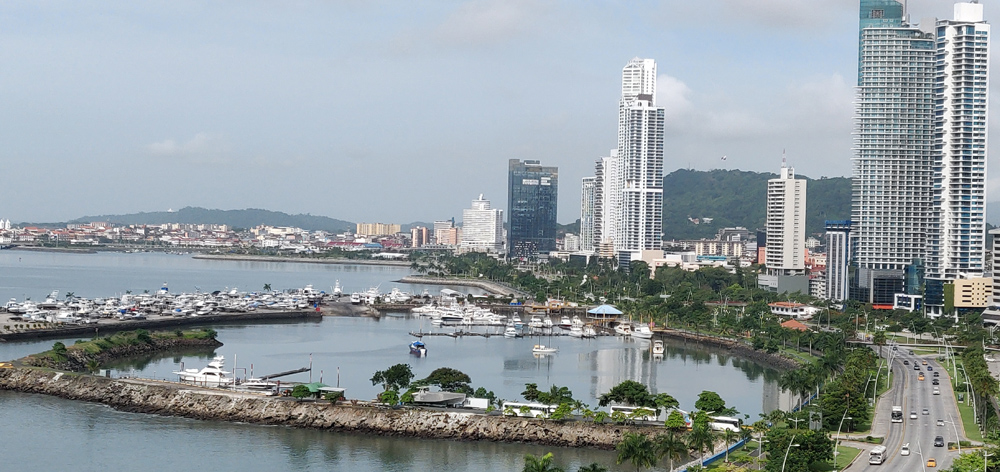
People ask all the time about Panama as the new Costa Rica. Both are popular expat locations and both have pros and cons. Panama is cheaper from a tax perspective since under the pensionado program there, property taxes are waived for at least 10 years but keep in mind that many who move there do not do so under the pensionado program, therefore they still pay property taxes. Candidly property taxes are low in both countries, so low that to base a consideration on where to live on that aspect makes no sense. Choose the place you like the best based on quality of life, health care, ease and cost of accessibility, activities available, infrastructure, friendliness, etc. Cost of living is candidly about the same in either country. Living in Panama City is similar to living in San Jose, lots of expats, more crime, like city living anywhere.
Costa Rica has many more Americans living there. There are only a handful of American expat communities in Panama, Boquette, El Valle, Boca Del Toros, all far away from Panama City. Panama is still trying hard to attract expats while Costa Rica is trying to slow down the inflow a bit. Sure I'm biased to Costa Rica but here are some facts that might also help you understand why we chose Costa Rica over Panama.
Looking at statistics on things like availability of clean drinking water, number of students enrolled in secondary educational istitutes, number of population living in poverty, Costa Rica is just much better. When basic needs are met, people prepare, educate and improve their situations. When basic needs are not met, people fall behind.
According to the United nations Office of Drugs and Crime One of the main reasons to prefer Costa Rica over Panama is the size of the middle class in Costa Rica versus Panama. According to the United nations Office of Drugs and Crime, in Panama nearly 81% of total population was living on less than $2.00 per day per capita in 2005. The number was only 13% in Costa Rica. There is also much higher use of drugs in Panama, both marijuana and cocaine. In Costa Rica, most of the population is descended from European Spanish, nearly 96%, while in Panama most are descended from groups indigenous to Latin America and Africa. The literacy rate in Costa Rica educational levels attained are much higher than in Panama.
Flights to Panama versus Flights to Costa Rica
If you look on sites like Kayak, Expedia or Travelocity for flights to Panama city, Panama Tocumen International, Airport code PTY you will see that the main carrier to PTY is TACA airlines and Copa. The airport is also serviced by American, Delta, United, Mexicana, Avianca, and Lacsa. The average price from Miami is under $300 on TACA but once you get onto an American bases airline, the price jumps to over $400 on American, over $500 on Continental and over $900 on Delta.
Performing the same search from Miami to San Jose Costa Rica (Juan Santamaria airport, code SJO) you will find United at $250, American at $301, Continenal at $302, Delta at $411, US Air at $400 and even carriers like Alaska Airlines, Jet Blue, Spirit Airlines, Frontier Airlines, as well as TACA, Lacsa, Mexicana and Avianca. More airlines and more flights equates to lower prices and more competition. So if you end up going back to the states or Canada a few times each year, your cost of accessibility will be significantly lower.
Pensionado Programs: Costa Rica has one of the oldest pensionado (retiree) programs on the planet. They reduced and eliminated many of the incentives they once offered to expats looking to immigrate there. They did so since their pensionado program was hugely successful. They initially offered a tax free import allowance though they do not any more. Typically the duty on a 40 foot container of household goods is about $1500 (quoted from ABC Moving) so there is your guideline on potential savings verus Panama.
Panama has a newer pensionado program. They are still trying to entice expats to move there. They are still offering a tax free allowance on personal goods coming to Panama for expats. In reality most expats bring little or nothing with them preferring to sell their possessions in the states and buy new ones that may be more appropriate to their new climate. Panama currently also grants a haven from property tax for the first x number of years. (x is currently 20). This exemption is subject to change but presently will save you about $200-$800 per year over a similiar home in Costa Rica. So the savings you may get through the current Pensionado program in Panama would potentially be offset by a couple traveling to the states once or twice per year at higher airfares. So let's compare some other considerations.
Crime: The 2009-2010 UNDP Human Development Report for Central America shows the homicide rate in Panama in 2008 was 19 per 100,000 inhabitants; much higher than the 2007 statistics, estimated at 13 per 100,000 inhabitants, and the 2000 figures that showed 10 per 100,000 inhabitants.
"Unfortunately, Panama had an impressive jump," said Hernando Gómez Buendia, coordinator of the report.
The report revealed that Panama is below Honduras, El Salvador, Guatemala, and Belize, which showed rates of 58, 52, 48 and 32 homicides per 100,000 inhabitants, respectively. Nonetheless, Panama is the country that observed the greatest increase in crime statistics across the region, according to the report.
Costa Rica showed a homicide rate of 11 per 100,000, up from 9 in 2007. The figure is 10 per 100,000 in the US.
Geography of Panama
| Location: |
Middle America, bordering both the Caribbean Sea and the North Pacific Ocean, between Colombia and Costa Rica |
| Coordinates: |
9 00 N, 80 00 W |
| Area: |
total: 78,200 sq km water: 2,210 sq km land: 75,990 sq km |
| Area comparative: |
slightly smaller than South Carolina |
| Land boundaries: |
total: 555 km border countries: Colombia 225 km, Costa Rica 330 km |
| Coastline: |
2,490 km |
| Maritime claims: |
contiguous zone: 24 NM exclusive economic zone: 200 NM territorial sea: 12 NM |
| Climate: |
tropical maritime; hot, humid, cloudy; prolonged rainy season (May to January), short dry season (January to May) |
| Terrain: |
interior mostly steep, rugged mountains and dissected, upland plains; coastal areas largely plains and rolling hills |
| Elevation extremes: |
lowest point: Pacific Ocean 0 m highest point: Volcan de Chiriqui 3,475 m |
| Natural resources: |
copper, mahogany forests, shrimp, hydropower |
| Natural hazards: |
occasional severe storms and forest fires in the Darien area |
| Environment current issues: |
water pollution from agricultural runoff threatens fishery resources; deforestation of tropical rain forest; land degradation and soil erosion threatens siltation of Panama Canal; air pollution in urban areas; mining threatens natural resources |
| Geography - note: |
strategic location on eastern end of isthmus forming land bridge connecting North and South America; controls Panama Canal that links North Atlantic Ocean via Caribbean Sea with North Pacific Ocean |
Population of Panama
| Population: |
3,309,679 (July 2008 est.) |
| Age structure: |
0-14 years: 30.3% (male 492,403/female 472,996) 15-64 years: 63.4% (male 1,025,898/female 998,926) 65 years and over: 6.3% (male 94,122/female 106,974) |
| Median age: |
26.1 years |
| Growth rate: |
1.6% |
| Infant mortality: |
16.37 deaths/1,000 live births |
| Life expectancy at birth: |
total population: 75.22 years male: 72.68 years female: 77.87 years |
| Fertility rate: |
2.68 children born/woman |
| Nationality: |
noun: Panamanian(s) adjective: Panamanian |
| Ethnic groups: |
mestizo (mixed Amerindian and white) 70%, Amerindian and mixed (West Indian) 14%, white 10%, Amerindian 6% |
| Religions: |
Roman Catholic 85%, Protestant 15% |
| Languages: |
Spanish (official), English 14% note: many Panamanians bilingual |
| Literacy: |
definition: age 15 and over can read and write total population: 92.6% male: 93.2% female: 91.9% |
Government
| Country name: |
conventional long form: Republic of Panama local long form: Republica de Panama |
| Government type: |
constitutional democracy |
| Capital: |
Panama |
| Administrative divisions: |
9 provinces (provincias, singular - provincia) and 1 territory* (comarca); Bocas del Toro, Chiriqui, Cocle, Colon, Darien, Herrera, Los Santos, Panama, San Blas*, and Veraguas |
| Independence: |
3 November 1903 (from Colombia; became independent from Spain 28 November 1821) |
| National holiday: |
Independence Day, 3 November (1903) |
| Constitution: |
11 October 1972; major reforms adopted 1978, 1983 and 1994 |
| Legal system: |
based on civil law system; judicial review of legislative acts in the Supreme Court of Justice; accepts compulsory ICJ jurisdiction, with reservations |
| Suffrage: |
18 years of age; universal and compulsory |
| Executive branch: |
chief of state: President Martin TORRIJOS Espino (since 1 September 2004); First Vice President Samuel LEWIS Navarro (since 1 September 2004); Second Vice President Ruben AROSEMENA Valdes (since 1 September 2004); note - the president is both the chief of state and head of government head of government: President Martin TORRIJOS Espino (since 1 September 2004); First Vice President Samuel LEWIS Navarro (since 1 September 2004); Second Vice President Ruben AROSEMENA Valdes (since 1 September 2004) cabinet: Cabinet appointed by the president elections: president and vice presidents elected on the same ticket by popular vote for five-year terms (not eligible for immediate reelection; president and vice presidents must sit out two additional terms (10 years) before becoming eligible for reelection); election last held 2 May 2004 (next to be held on 3 May 2009); note - beginning in 2009, Panama will have only one vice president. |
| Legislative branch: |
unicameral National Assembly (formerly called Legislative Assembly) or Asamblea Nacional (78 seats; members are elected by popular vote to serve five-year terms); note - in 2009, the number of seats will change to 71 |
| Judicial branch: |
Supreme Court of Justice or Corte Suprema de Justicia (nine judges appointed for 10-year terms); five superior courts; three courts of appeal |
Economy
Panama's dollarized economy rests primarily on a well-developed services sector that accounts for two-thirds of GDP. Services include operating the Panama Canal, banking, the Colon Free Zone, insurance, container ports, flagship registry, and tourism. Economic growth will be bolstered by the Panama Canal expansion project that began in 2007 and should be completed by 2014 at a cost of $5.3 billion (about 30% of current GDP). The expansion project will more than double the Canal's capacity, enabling it to accommodate ships that are now too large to transverse the transoceanic crossway and should help to reduce the high unemployment rate. The government has implemented tax reforms, as well as social security reforms, and backs regional trade agreements and development of tourism. Not a CAFTA signatory, Panama in December 2006 independently negotiated a free trade agreement with the US, which, when implemented, will help promote the country's economic growth.
| GDP: |
$34.81 billion (2007 est.) |
| GDP growth rate: |
6.4% |
| GDP per capita: |
$10,700 |
| GDP composition by sector: |
agriculture: 6.8% industry: 15.6% services: 77.6% |
| Inflation rate: |
2.9% |
| Labor force: |
1.39 million note: shortage of skilled labor, but an oversupply of unskilled labor |
| Labor force - by occupation: |
agriculture: 20.8% industry: 18% services: 61.2% |
| Unemployment: |
9.8% |
| Electricity production by source: |
fossil fuel: 37% hydro: 61.3% other: 1.7% nuclear: 0% |
| Industries: |
construction, brewing, cement and other construction materials, sugar milling |
| Agriculture: |
bananas, rice, corn, coffee, sugarcane, vegetables; livestock; shrimp |
| Exports: |
bananas, shrimp, sugar, coffee, clothing |
| Export partners: |
US 18.3%, Spain 15.6%, Germany 7.9%, Greece 4.1% |
| Imports: |
capital goods, foodstuffs, consumer goods, chemicals |
| Import partners: |
Japan 36.2%, China 16.5%, US 11.4%, Singapore 10% |
| Currency: |
balboa (PAB); US dollar (USD) |
| Currency code: |
PAB; USD |
SOURCES: The CIA World Factbook, U.S. Department of State, Area Handbook of the US Library of Congress
Geography of Costa Rica
| Location: |
Middle America, bordering both the Caribbean Sea and the North Pacific Ocean, between Nicaragua and Panama |
| Coordinates: |
10 00 N, 84 00 W |
| Area: |
total: 51,100 sq km water: 440 sq km note: includes Isla del Coco land: 50,660 sq km |
| Area comparative: |
slightly smaller than West Virginia |
| Land boundaries: |
total: 639 km border countries: Nicaragua 309 km, Panama 330 km |
| Coastline: |
1,290 km |
| Maritime claims: |
continental shelf: 200 NM exclusive economic zone: 200 NM territorial sea: 12 NM |
| Climate: |
tropical and subtropical; dry season (December to April); rainy season (May to November); cooler in highlands |
| Terrain: |
coastal plains separated by rugged mountains including over 100 volcanic cones, of which several are major volcanoes |
| Elevation extremes: |
lowest point: Pacific Ocean 0 m highest point: Cerro Chirripo 3,810 m |
| Natural resources: |
hydropower |
| Natural hazards: |
occasional earthquakes, hurricanes along Atlantic coast; frequent flooding of lowlands at onset of rainy season and landslides; active volcanoes |
| Environment - current issues: |
deforestation and land use change, largely a result of the clearing of land for cattle ranching and agriculture; soil erosion; coastal marine pollution; fisheries protection; solid waste management; air pollution |
| Geography - note: |
four volcanoes, two of them active, rise near the capital of San Jose in the center of the country; one of the volcanoes, Irazu, erupted destructively in 1963-65 |
Population of Costa Rica
| Population: |
4,195,914 (July 2008 est.) |
| Age structure: |
0-14 years: 28.3% (male 590,261/female 563,196) 15-64 years: 66% (male 1,359,750/female 1,329,346) 65 years and over: 5.7% (male 108,041/female 124,667) |
| Median age: |
26.4 years |
| Growth rate: |
1.45% |
| Infant mortality: |
9.7 deaths/1,000 live births |
| Life expectancy at birth: |
total population: 77.02 years male: 74.43 years female: 79.74 years |
| Total fertility rate: |
2.24 children born/woman |
| Nationality: |
noun: Costa Rican(s) adjective: Costa Rican |
| Ethnic groups: |
white (including mestizo) 94%, black 3%, Amerindian 1%, Chinese 1%, other 1% |
| Religions: |
Roman Catholic 76.3%, Evangelical 13.7%, Jehovah's Witnesses 1.3%, other Protestant 0.7%, other 4.8%, none 3.2% |
| Languages: |
Spanish (official), English |
| Literacy: |
definition: age 15 and over can read and write total population: 96% male: 95.9% female: 96.1% |
Government
| Country name: |
conventional long form: Republic of Costa Rica local long form: Republica de Costa Rica |
| Government type: |
democratic republic |
| Capital: |
San Jose |
| Administrative divisions: |
7 provinces (provincias, singular - provincia); Alajuela, Cartago, Guanacaste, Heredia, Limon, Puntarenas, San Jose |
| Independence: |
15 September 1821 (from Spain) |
| National holiday: |
Independence Day, 15 September (1821) |
| Constitution: |
7 November 1949 |
| Legal system: |
based on Spanish civil law system; judicial review of legislative acts in the Supreme Court; has accepted compulsory ICJ jurisdiction |
| Suffrage: |
18 years of age; universal and compulsory |
| Executive branch: |
chief of state: President Oscar ARIAS Sanchez (since 8 May 2006); First Vice President Laura CHINCHILLA (since 8 May 2006); Second Vice President (vacant); note - the president is both the chief of state and head of government head of government: President Oscar ARIAS Sanchez (since 8 May 2006); First Vice President Laura CHINCHILLA (since 8 May 2006); Second Vice President (vacant) cabinet: Cabinet selected by the president elections: president and vice presidents elected on the same ticket by popular vote for a single four-year term; election last held 5 February 2006 (next to be held in February 2010) |
| Legislative branch: |
unicameral Legislative Assembly or Asamblea Legislativa (57 seats; members are elected by direct, popular vote to serve four-year terms) |
| Judicial branch: |
Supreme Court or Corte Suprema (22 justices are elected for eight-year terms by the Legislative Assembly) |
Economy
Costa Rica's basically stable economy depends on tourism, agriculture, and electronics exports. Poverty has remained around 20% for nearly 20 years, and the strong social safety net that had been put into place by the government has eroded due to increased financial constraints on government expenditures. Immigration from Nicaragua has increasingly become a concern for the government. The estimated 300,000-500,000 Nicaraguans estimated to be in Costa Rica legally and illegally are an important source of (mostly unskilled) labor, but also place heavy demands on the social welfare system. Foreign investors remain attracted by the country's political stability and high education levels, as well as the fiscal incentives offered in the free-trade zones. Exports have become more diversified in the past 10 years due to the growth of the high-tech manufacturing sector, which is dominated by the microprocessor industry. Tourism continues to bring in foreign exchange, as Costa Rica's impressive biodiversity makes it a key destination for ecotourism. The government continues to grapple with its large internal and external deficits and sizable internal debt. Reducing inflation remains a difficult problem because of rising import prices, labor market rigidities, and fiscal deficits. Tax and public expenditure reforms will be necessary to close the budget gap. In October 2007, a national referendum voted in favor of the US-Central American Free Trade Agreement (CAFTA).
| GDP: |
$45.77 billion (2007 est.) |
| GDP growth rate: |
4% |
| GDP per capita: |
$11,100 |
| GDP composition by sector: |
agriculture: 8.8% industry: 29.9% services: 61.4% |
| Inflation rate: |
13.8% |
| Labor force: |
1.82 million |
| Labor force - by occupation: |
agriculture: 20% industry: 22% services: 58% |
| Unemployment: |
6.6% |
| Budget: |
revenues: $2.722 billion expenditures: $3.195 billion |
| Electricity production by source: |
fossil fuel: 1.5% hydro: 81.9% other: 16.6% nuclear: 0% |
| Industries: |
microprocessors, food processing, textiles and clothing, construction materials, fertilizer, plastic products |
| Agriculture: |
coffee, pineapples, bananas, sugar, corn, rice, beans, potatoes; beef; timber |
| Exports: |
coffee, bananas, sugar; pineapples; textiles, electronic components, medical equipment |
| Export partners: |
US 30.3%, Netherlands 13.1%, UK 7.9%, China 7.7% |
| Imports: |
raw materials, consumer goods, capital equipment, petroleum |
| Import partners: |
US 43.2%, Japan 5.8%, Mexico 5.5%, Brazil 4.6%, Venezuela 4.5% |
| Currency: |
Costa Rican colon (CRC) |
SOURCES: The CIA World Factbook, U.S. Department of State, Area Handbook of the US Library of Congress
Unicef's basic indicators on health, nutrition, education, economic condition, demographics and life expectancy puts Costa Rica WAY ON TOP. Here are links to both countries for you to compare
http://www.unicef.org/infobycountry/costarica_statistics.html
http://www.unicef.org/infobycountry/panama_statistics.html
Please tell your friends about our blog and feel free to
SUBSCRIBE OR LINK TO OUR BLOG as well.
Posted by Steve Linder on Fri, Feb 05, 2010
Get a free DVD about Costa Rica here FREE DVD
Endangered Delicacy- It's that time of year again, when the sea turtles nest on the beaches of Costa Rica. Actually in Costa Rica it is all the time, but more people are aware of these hatchings during high season. Turtle eggs are believed to be an aphrodisiac and help fight erectile dysfunction. My mouth is watering! They are therefore often illegally poached and sold throughout much of Latin America, the forbidden egg. I had the pleasure of seeing these amazing creatures come ashore en mass in Ostional, on the Pacific Coast years ago. Ridley turtles arrive here in one small stretch of sandy beach to lay eggs. It is unclear why this particular spot is chosen.
A Sandy Omelet?- Scientists found that the turtles come ashore here four or five times over a 10 month period. Each time hundreds of Ridley Turtles arrive in Ostional for a mass egg laying fest, coming to shore in mass nesting events, what are called an arribada, "an arrival". Each turtle lays 100 eggs or more. The event will last for 4 or 5 days and scientists discovered that since eggs deposited by early arrivees were being crushed by the next waves of turtles coming to lay eggs, it made sense to allow locals in this area to remove the first wave of eggs, since they were destined to be crushed anyway. It was also realized that eggs laid during the dry season were unlikely to ever hatch due to the heat of the sand, which dehydrated the eggs.
Let them Eat Eggs - So it was decided to let the towns folk collect and sell the eggs and use the money to help preserve the eggs in the subsequent waves of egg laying. The money was also used to build facilities in town, like schools and a clinic. Some of the money also ends up in the pockets of towns people, providing income where few jobs exist. The collected eggs are sold in bars and stores to meet the demand for turtle eggs and helps discourage poaching of eggs more likely to hatch. By providing a sufficient source of turtle eggs, the price of eggs stays low on the black market, discouraging incentive to poach them. Ridley turtle eggs are about the size of a lime and leathery. They are amazingly tough and can be gathered into large sacks without breaking.
Egg Grog- Since 1986 turtle eggs have been legally gathered by an organization know as the Association of Integral Development of Ostional (AIDO). The main goal of the exploitation and marketing of turtle eggs by the Association of Integral Development of Ostional (AIDO) is to achieve social growth of the community through controlled removal of eggs without compromising the reproduction and conservation of the species. The eggs were initially sold through the association but in about 1990 a food purveyor took over distribution on a national basis. Most of the eggs end up in and around the central valley and nearly 90% of them are consumed in bars, often mixed with catsup and a few other lesser ingredients in a beverage known as a sangrita, served with beer. The belief that turtle eggs increase sexual vigor results in nearly all eggs collected being consumed by adult males.
I Like Leatherbacks- Out of the 8 species of sea turtles in the world, 6 migrate to Costa Rica for egg laying. Other species that breed in Costa Rica include the Baula (leatherback), the carey, the negro del pacifico and the carpentera. Only the Ridley turtle eggs, specifically in Ostional, are allowed to be legally collected. It is estimated that roughly 6% of all turtle eggs sold in Costa Rica are illegally poached, considered to be a much lower number than if the legal gathering was not permitted. It is believed that only 1 in 100,000 eggs will result in a mature turtle due to natural pressure from gulls and vultures, mammals like raccoons, and unnatural factors like fishing nets that drown turtles and the illegal collection of turtles for their meat and shells. There are a considerable number of turtle preservation programs in Costa Rica, many protecting the eggs from predators.
Preserved Eggs- In the Refugio Nacional Playa Hermosa there is a strong preservation program and in our region in the southern Pacific, there is a program run by Hacienda Baru in Dominical. Here turtle eggs are gathered and placed in sand boxes covered by protective netting to keep birds and animals from molesting both the eggs and the hatchlings. Upon hatching, the baby turtles are released directly into the water, avoiding the run across the beach that often results in many being eaten by birds.
Please tell your friends about our blog and feel free to
SUBSCRIBE OR LINK TO OUR BLOG as well.